Thursday, October 22, 2009

2010 Cadillac CTS Sportwagon Review

2010 Cadillac CTS Sportwagon

In Europe, the humble station wagon holds a big-time slice of the family driver demographic, partly because ridiculous petrol prices make big SUVs and crossovers far too uneconomical. Americans, on the other hand, have a fundamental problem with the station wagon. We're not sure if the wagon is uncool because it was our parents' preferred family vehicle or if the aesthetics of it are just too boxy for our fashion forward culture. The only subset of the American public who has consistently called for more wagons are automotive enthusiasts, though even we seldom seem to vote for the Griswald Family Truckster with our pocketbooks.

Cadillac is all too aware of America's disdain for the wagon, as evidenced by the fact that General Motors' luxury brand has never built a squat two box for the U.S. market. That changes for 2010 as the Wreath and Crest begins production of its 2010 Cadillac CTS Sportwagon. This Caddy begins life with hot-to-trot sheetmetal and the underpinnings of the excellent CTS sedan, but does it have the chutzpah to change our less than flattering opinions about the station wagon? We gave the CTS Sportwagon some time in the Autoblog Garage to see if the first-ever U.S.-market Caddy wagon has the goods to make Americans stop their loathing and get to loading.

When Cadillac set out to build a wagon version of the popular CTS sedan, the goal was to export a considerable volume overseas where wagons are welcomed with open arms. A new 2.9-liter diesel powertrain was rumored to be the engine of choice for our European allies, giving car buyers the oil burners they expect across the pond. By the time the production CTS Sportwagon was ready for prime time, though, General Motors was prepping for bankruptcy and its Europe-based Opel brand was on the auction block. Gas prices had also dropped considerably here in the States, making the prospect of an expensive diesel engine in the U.S. market even more unlikely.

After months of careful planning, GM's plan to build many CTS Sportwagons for overseas markets is looking as hazy as the Southern California skyline. The Caddy wagon may now have to survive mainly by its success or failure in North America, and GM is clearly hoping that high style with a dash of functionality will win the day.


At first glance, the CTS Sportwagon is a real eye-catcher. It's bold, form-over-function sheetmetal catches the eye, then details like three-foot-long tail lights and 19-inch wheels help keep onlookers fixed on the prize. Cadillac has astutely dialed back its chrome quotient over the past couple years, and the CTS Sportwagon manages to stand out without mimicking a pimp's dental work.

What makes the CTS Sportwagon really look special is its raked roofline, which gives it an athletic appearance. Cadillac will tell you that the 58-cubic-feet of cargo capacity with the rear seats folded flat are within one foot of the much taller SRX, but we'd argue that the smallish rear hatch opening and steeply raked roofline makes that space far less usable. For example, we couldn't fit a kid's bike in the back (with the rear seat up) without removing the handle bars. We're talking about a six-year-old's bike, but the low roofline of the CTS Sportwagon doesn't abide by awkward-shaped objects.


The Sportwagon does have some strong utilitarian points, though, including a power liftgate that adjusts its opening height at the touch of a button (to accommodate short drivers or low garage clearances) and an ingenious cargo management system that allows owners to corral their groceries in a manner that prevents them from sliding all over the place. There is also a cargo door on the rear floor that reveals a recessed area with a rubber floormat to secure more valuable items from public view.

But any shortcomings the CTS Sportwagon has out back is more than made up for with a brilliantly laid out cabin that mirrors that of the CTS sedan. Cadillac designers have included soft touch materials throughout accented by the brand's well-regarded cut-and-sew stitching. The seats in the CTS are terrific, with firm foam to keep backsides happy even on long drives, along with lateral bolstering suitable for a luxury vehicle that just happens to have some moves. The Caddy's center stack doubles as an infotainment command center, with an available ginormous pop-up navigation screen that is easy to use, along with terrifically executed MP3 player integration that works without the need to hit a bunch of buttons.


Of course, the minute we discovered that we could simply call On-Star and tell them where we wanted to go and they'd map out our destination for us, we got lazy and stopped entering info into the navigation system ourselves. Using On-Star is safer and arguably easier, as you interact with an actual human being who can help determine exactly where you need to go, even if you're traveling at 70 mph. That said, not everyone is interested in interacting with an actual human being – or adding another monthly fee to their stack of bills – and will be perfectly happy with Cadillac's nav system that forgoes joysticks, knobs and other crazy controllers for simple onscreen executions.

While the CTS Sportwagon is impressive inside, it certainly isn't perfect. Lack of driver legroom is the largest issue. That command center of the center stack is so wide that it intrudes upon the driver's right knee space. It's almost impossible for an average-sized driver to find an ideal driving position unless the seat is moved uncomfortably far away from the steering wheel. Cadillac could partially alleviate the pain of this encroachment by adding some cushy padding to the sides of the stack, as what's currently there doesn't give enough to coddle our caps. Another more minor annoyance is that the car's high beltline narrows the view outside and makes the cabin feel isolated.


As a luxury wagon, Cadillac delivers the style and comfort that customers expect. But since Cadillac has decided to go the extra mile and call its newest ride a Sportwagon, we expect an engaging driving experience as well. To examine the SW's performance chops, we first look at hardware. Our tester came equipped with a direct injected 3.6-liter V6 engine capable of 304 horsepower and 273 lb-ft mated to a slick-shifting six-speed automatic transmission. Our rear-wheel drive Sportwagon also came equipped with 19-inch alloys covered with super sticky ContiSport Contact 3 summer radials, GM's taut FE3 suspension package and a moonroof, bringing its MSRP to $53,455. All-wheel drive is available at extra cost, but our tester's pricetag is otherwise representative of a fully loaded example.

On paper, the CTS Sportwagon sounds like a competent performer, and the specs are confirmed when judged from behind the wheel. When tooling around town, the 3.6-liter V6 is very responsive, with ample power available across the range. When in auto mode, a quick stab at the pedal results in a slight delay before acceleration, but head over to sport mode and you'll find that the go pedal is markedly more responsive. GM says the CTS Sportwagon will hit 60 mph in 6.9 seconds, which isn't exactly burning up the pavement but more than adequate in a two ton luxury tourer. We achieved 21 mpg while largely tooling around town in the CTS Sportwagon; a mid-pack figure that is in line with its expected 18/25 fuel economy numbers.


The sedan version of the Cadillac CTS really comes alive on the open road, but we had our reservations that the wagon's extra 200 lbs would hamper performance. We didn't worry for long. The Sportwagon has the same 191.6 inch length and 113.4 inch wheelbase as the sedan, and its hardware hasn't been dumbed down for wagon duty. Our tester's FE3 suspension held this Caddy tight in and out of curves, with minimal body roll and plenty of confidence that the ContiSport grip wasn't about to go ghost.

In our estimation, the only downside to selecting the FE3 suspension package is that it doesn't soak up bumps in the road quite as efficiently as we'd like, though we'd trade the added layer of plushness for handling any day of the week – and that's here in Michigan, where most of the road surfaces are just potholes holding hands. The Sportwagon's rack-and-pinion steering feels a bit light in stop-and-go traffic, but get its veins pumping and feedback and precision increases with speed. Interestingly, there was quite a bit of brake pedal travel on our tester, a condition that happens occasionally with aggressively driven media vehicles. We still had no problem bringing the two-ton wagon to a quick stop when the need arose, but we'd be curious to see if a fresh-from-the-line example would still show the same pedal characteristics.


It isn't hard to figure out what enthusiasts want out of an entry-level luxury vehicle. Bold, attention-grabbing styling, plenty of power and the latest tech advances are all part of the docket, and the Cadillac CTS Sportwagon delivers on all fronts. The CTS Sportwagon may well be the best looking vehicle in the Cadillac lineup, and it helps that it is also blessed with the soul of its brilliant sedan stablemate. In all, the Cadillac CTS Sportwagon offers plenty to love at a price that starts at $40,655 (including $825 for in destination charges). Add a capable, 304 hp 3.6-liter V6 and the added cargo capacity that comes with a 21st century station wagon, and the CTS Sportwagon may actually be the kind of wagon that wins over the finicky American consumer – it did the trick with us.

Tuesday, October 20, 2009

Cadillac Invites Women for Test Drive


Say you're Cadillac. For decades, you have been the go-to ride for old men who play golf. A status symbol for grandpas.

But time passes. Women browse car lots without men telling them what to do. They care about fuel economy and the ozone and cup holders and where the soccer balls will go.

If you're Cadillac, how do you get people talking about you again?

You play fairy godmother. You find dozens of well-connected Tampa women and shower them with fresh-smelling luxury cars. You dispatch them on local roads. You ask them to blog. How does it handle in the grocery store lot? How do their kids like the leather? How does the stereo sound while cruising over the Sunshine Skyway?

You ask them to tell their friends. And you hope they hyperventilate a little when they do.

Just parked my beautiful Cadillac SRX in the parking garage to walk over to TBPAC for the Tampa Bay TweetUp hosted by Tampa Bloggers!

2003-2007 Cadillac CTS and CTS-V


The CTS was born out of Cadillac’s Art and Science design language, a move aimed at making this mid-sized luxury car stand out from its Teutonic competition. It did, and simply because of its sharp, angular, lines.

When launched as a 2003 model, the CTS replaced the Catera — this car was a lesson on how to take a successful European car (the Opel Omega MV6) and turn it into a moribund offering that did little to further Cadillac’s reputation (only the Chevrolet Cavalier-based Cadillac Cimarron did more to tarnish the brand). The good news is that the CTS turned out to be, and still is, a ride that has done more than a little to return the shine to the company’s image.

When it debuted, the base CTS was offered with Deluxe and Sport packages. Along with its bold exterior style, the CTS also ushered in a new level of interior refinement. The cluttered look of old made way for a cohesive cockpit that was as easy on the eyes as it was to find and operate the key controls. It also delivered the needed interior space without making the car feel large when driven with enthusiasm. The back seat provided enough space for two adults and the 12.8-cubic-foot trunk accommodated a family of four’s luggage with ease.

The entry-level car included air conditioning, the needed power accessories including an eight-way power driver’s seat, cruise control and a decent traction control system. The Deluxe package added an eight-way power passenger seat, a garage door opener, a digital voice recorder, a driver’s seat memory package, some tasteful real wood accents and an auto-dimming rear-view mirror with compass.

The Sport package, which included the Deluxe upgrades, brought a sports-tuned suspension with automatic rear load levelling, high-performance brake linings, P225/50R17 tires and speed-sensitive steering. It also added something that should have been standard across the board — StabiliTrak, General Motors’ sophisticated stability control system.

Thursday, October 15, 2009

2011 Cadillac CTSv Coupe Cadillac to roam streets with fast sports car

2011 Cadillac CTSv Coupe

When the summer of 2010 rolls around, Cadillac will have seriously fast two-door sports cars roaming the streets: the CTSv Coupe.

Testing is under way, and we've spied this very production-looking prototype cruising the rural roads of Michigan.

Compared to the prototypes we saw last year, the new one has a very finished look, right down to the two massive center-mount exhaust outlets; larger, sportier wheels; and V-series badging. We can also see that this new prototype is not sporting cross-drilled rotors as the first prototypes were. Additionally, pieces of black tape cover the V-series badges just behind the front wheels.

Saturday, October 10, 2009

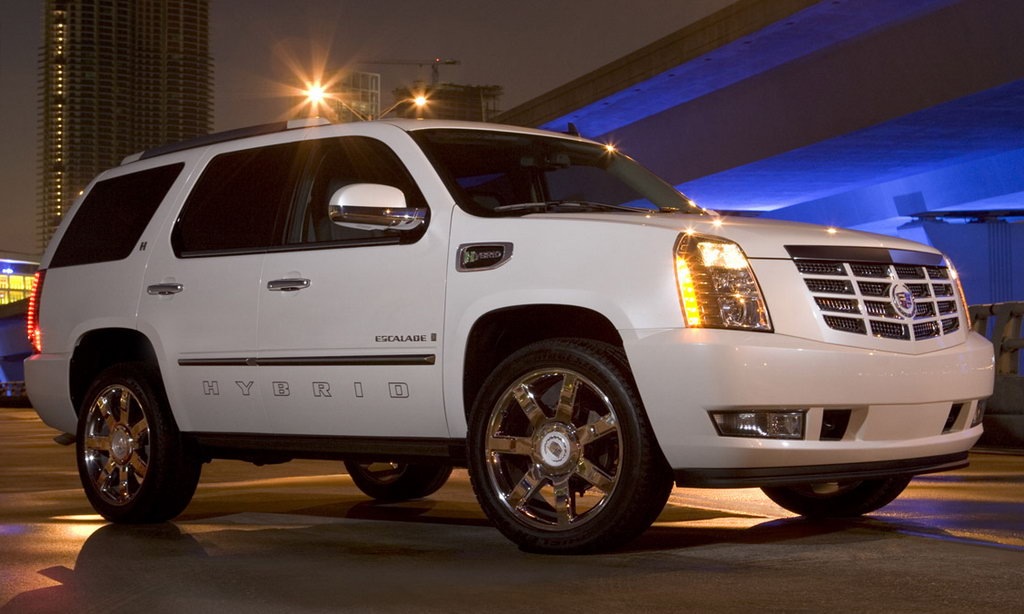
Cadillac Escalade 2009 Review and Price

A hybrid version of the luxury vehicle began in 2008 South Florida International Auto Show in Miami and was released in 2008 as a model starting from 2009 $ 74,085 for a two-wheel drive model. In August, 20% of sales are hybrids.
Cadillac Escalade 2009

Sunday, October 4, 2009

Cadillac CTS-V price and pictures

Cadillac CTS-V price for British market has been announced by Cadillac. Powered by a supercharged 6.2-litre V8 powerplant, Cadillac CTS-V may outputs 564 ps (415 kW) and 747 Nm of torque.

Cadillac CTS-V will reach its top speed at 191 mph and have 0 to 60 mph in 3.9 seconds acceleration time.

Cadillac CTS V price for British will starts at 56,495 pounds on-the-road for the manual gearbox version. While for for the automatic transmission model, the Cadillac CTS V price will starts at 58,995 pounds.

Cadillac CTS-V will become available in showrooms from February 2009.

Cadillac CTS-V Car

Press Release
The all-new CTS-V ‘supersaloon’ – the most powerful Cadillac ever – is available from February 2009 and will be priced from £56,495 on-the-road (£58,995 for the automatic transmission model).

CTS-V’s supercharged 6.2-litre V8 engine delivers 564 ps (415 kW) and 747 Nm, launching the car to 60 mph in just 3.9 seconds and on to 191 mph where legal (175 mph for the automatic transmission).

Its incredible performance capabilities enabled the CTS-V to claim the unofficial lap record for a production saloon (7 mins 59.32 secs) around the Nürburgring’s legendary Nordschleife circuit in October 2008.

“The CTS-V represents the extreme extension of Cadillac’s current design language and its performance technology capabilities,” said Jonathan Nash, director in charge of Cadillac UK. “The V-Series developments take the highly accomplished CTS launched last summer and elevate it to a position within the club of the world’s high-performance supersaloons.”

Cadillac CTS-V

Working in harmony with the extraordinary power unit is the latest generation of the world’s fastest-reacting suspension technology, Magnetic Ride Control (MRC), which uses shock absorbers controlled by electro-magnets, rather than mechanical valves, greatly accelerating response time. CTS-V is also equipped with powerful Brembo brakes; mighty six-piston callipers act on colossal 380 mm discs at the front, and four-piston callipers on 373 mm discs at the rear. These impressive features, along with four-channel ABS, hydraulic brake assist and dynamic rear brake proportioning, ensure that the immense performance capability of Cadillac’s most powerful model in history is delivered within a package of equally advanced vehicle dynamics technologies.

Complementing its incredible performance, the left-hand drive CTS-V also delivers the refinement of a fully appointed prestige saloon. New, 14-way adjustable Recaro® performance driving seats, high quality ‘hand cut-and-sewn’ double stitched leather and sueded material, and a distinctive new high-gloss black Obsidian surface finish, all combine to deliver an exceptionally luxurious, comfortable cabin. Other features include a premium voice activated infotainment package featuring intelligent iPod® integration, 40 GB hard drive and an advanced hard-disk navigation system.

The CTS-V’s single luxurious specification combined with astonishing performance capabilities and technologies delivers an exceptional driving experience for even the most demanding motorist.

Cadillac Converj Concept Car

Cadillac Converj is the latest grand touring coupe car concept that has been unveiled by General Motors at the NAIAS. Powered by a 220 lithium-ion cells battery pack integrated in the chassis of the car, Cadillac Converj offers a range of 40 miles.

To fully re-charge from a 240V outlet, Cadillac Converj needs around 3 hours. While from a 120V, Cadillac Converj needs 8 hours.

The latest electric propulsion technology from the company called Voltec is showcased on this Cadillac Converj. With the new tech, Cadillac Converj may gets up to 40 miles of gas- and emissions-free driving.

Cadillac Converj also comes with some features include Touch-screen navigation, climate, organic light-emitting diode technology, center-stack controls and audio systems and a unique power on sequence featuring blue-lit console graphics.

Cadillac Converj Concept Car

Press Release
General Motors unveiled a further glimpse at the potential of electric propulsion today, this time in the form of luxury transportation, with the Cadillac Converj Concept. The Cadillac Converj was developed as a well-appointed grand touring coupe with a bold design and a host of interactive technology.

The four-passenger Converj concept is intended to show how GM’s revolutionary electric propulsion technology – called Voltec – can power a luxury coupe with a typically Cadillac “no compromises” design. The technology enables up to 40 miles of gas- and emissions-free electric driving with extended-range capability of hundreds of miles.

Cadillac Converj Concept

Bob Lutz, GM’s vice chairman of Global Product Development, said the Converj concept has production substance. “It’s a logical extension of our plan to reinvent the automobile,” he said. “It clearly shows what a Cadillac electric vehicle could look like, and clearly indicates that global luxury customers can have a car that has both strong design and electric propulsion with a total range of hundreds of anxiety-free miles.”

Cadillac’s extended-range electric vehicle (E-REV) concept has a new body style that is an evolution of the brand’s traditional Art and Science design theme. An aggressive, forward-leaning arc profile is the foundation for the sporting stance. And more than a Cadillac in form, Converj is also intended to be a Cadillac in substance, with the premium materials, technology and driving dynamics that are hallmarks of the brand.

Cadillac Converj Concept Car Picture

Voltec – innovative propulsion technology

The Cadillac Converj’s Voltec electric propulsion system is made up of a 16-kWh, T-shaped battery, an electric drive unit, and a four-cylinder engine-generator. It uses electricity as its primary source to drive the car.

A thermally managed battery pack contains more than 220 lithium-ion cells that provide the primary power to drive the Converj electrically up to 40 miles without using fuel or producing tailpipe emissions. The battery is integrated into the Converj’s chassis and stores electricity from the grid when the vehicle is plugged in.

It takes less than three hours to recharge the battery at 240V, or about eight hours from a 120V outlet.

Cadillac Converj Concept Car Image

When the battery’s energy is low, the Converj seamlessly switches to extended-range mode. During this secondary level of operation, electricity needed to power the vehicle is created on-board by a flex-fuel-powered engine that operates much like a home generator to create electricity. The engine-generator ensures a constant supply of power for hundreds of miles until the car is refueled or plugged in to recharge the battery. This extended-range mode eliminates the range anxiety that comes with driving pure electric vehicles that offer no backup power when the battery charge is low.

Whether in electric or extended-range mode, the Converj is propelled all the time by an electric drive unit. It converts electrical energy from the battery or the engine-generator into mechanical energy to drive the front wheels. It also delivers 273 lb.-ft. (370 Nm) of instant torque, for a quick launch, and 120 kW of power. The top speed is 100 mph.

There is no compromise in vehicle performance in either mode of operation. To enhance the ride feel, the Converj also features GM’s Magnetic Ride Control; and for even greater efficiency, energy during braking is captured and stored in the battery.

Cadillac Converj Picture

Pure Cadillac design

There’s no mistaking the Converj for anything but a Cadillac, according to Lutz. “An aggressive, forward-leaning profile hints at a new, progressive theme and proportion in Cadillac’s design evolution,” he says. “The new proportion showcases a uniquely shaped, modern vision of a personal luxury 2+2.”

The overall shape is reinforced by a prominent, sweeping body line with large, 21-inch (front) and 22-inch (rear) wheels pushed to the edges of the body. The Converj exterior is painted a dark silver tri-coat that GM designers dubbed “Reaction.”

Cadillac Converj Photo

An all-glass roof incorporates solar panels that help offset power drain from the vehicle’s accessories. Additionally, several aerodynamic and design efficiencies were incorporated to enhance the driving range, including:

A full under-vehicle cover (belly pan)
Minimal grille openings that reduce drag at the front of the vehicle
Low-profile rearview cameras replace conventional outside mirrors to reduce drag
Wheels are shaped to push air outward for smoother body side airflow
The Converj also incorporates vertical headlamp and taillamp elements, with light pipe technology.

“Vertical lamps are Cadillac signatures and the Converj builds on the brand’s light pipe technology with bolder light emitting diode (LED) and high-intensity discharge elements front and rear,” said Clay Dean, global design director for Cadillac. “There is also a unique daylight light ‘spear’ at the top of the headlamps.”

Cadillac Converj Image

Luxury meets technology inside

The Converj’s interior has advanced features and luxurious appointments blending efficiency and environmental consciousness. The 2+2 configuration is trimmed in contrasting Winter White synthetic suede – including the top of the instrument panel – and Midnight Black leather, with polished aluminum and wood grain accents. Renewable materials are used throughout such as wool-blend carpeting, a headliner made from silk, suede made from post-industrial content and more.

Cadillac Converj Interior

A technologically advanced driver center increases efficiency and reduces the draw on the battery. Features include:

New, organic light-emitting diode technology used on reconfigurable instrument cluster
Touch-screen navigation, climate, center-stack controls and audio systems
Adjustable, overhead white ambient lighting
Unique “power on” sequence featuring blue-lit console graphics
Screen displays for features including regenerative braking, battery charge level and power output
No inside rearview or outside mirrors; cameras provide surrounding images on a screen placed high on the instrument panel for a full, panoramic view
Push-button ignition and power-folding front seats

Cadillac Converj Concept Car Interior

Acura Fan Club

New Cars Latest